

When appraising properties, it’s essential to understand the market conditions that cause prices to increase or decrease. Some of these factors include interest rates, availability of debt capital, and changes in supply and demand. Fluctuations in demand are caused by fluctuations in fundamental forces, which include population, income, employment, and consumer attitudes and preferences.
Increases in population, income, and employment fuel demand, which causes prices to increase when there’s more demand than supply. Understanding how a local market is performing in these areas is crucial when appraising properties. The Charleston area, one of our primary service areas, is one of the hottest markets in SC and in the US, and is positioned to be a leader in the commercial real estate market. Here’s why:
In 2024, visitors to Charleston numbered 7.89 million. The hotel industry has maintained a 70.6% average occupancy rate and increased rates over several years. Short-term rentals have also seen rising popularity. This beautiful city is responsible for almost half of the tourism economic impact in the state, “bringing in $14.03 billion in 2024,” according to Charleston Regional Business Journal, which represented close to 25% of Charleston’s economy in 2024.
Some of these visitors then decide to make Charleston their home. Approximately 34 people move to Charleston each day. As a result, the population has been growing three times faster than the national average. Charleston’s charm and livability are significant factors in attracting new residents, which increases the demand for housing in the area. Charleston has an equivalent number of housing permits as Boston, which is four times its size.

Another critical factor in population growth is a wide array of job opportunities.
According to Charleston Regional Business Journal, “from January 2020 to September 2024, Charleston has created more jobs than the entirety of Illinois, the sixth most populated state in the U.S.” From 2022 to October 2023, the metro area increased jobs by 6.1%, the highest of all US metros during the same time frame.
The Charleston area has a diverse and vibrant economy. Recently nicknamed “Silicon Harbor,” given its rapid growth in software and internet technology, the city was once dominated by military and hospitality. Today, however, Charleston boasts equivalent employment in:

Photo Credit/SC Ports/Walter Lagarenne
One of the most significant drivers of economic growth in the area is the Port of Charleston, the state’s top economic driver. With the completion of the harbor deepening project, the Port of Charleston now has the deepest waterway along the East Coast, allowing it to accommodate the most significant and heaviest container ships.
The reopening of the Leatherman Terminal and the nearby rail project for cargo loading and unloading enhance the economic outlook of the area, as do the presence of Charleston International Airport, nearby Interstate 26, and inland ports in the state. These logistical attributes attract international trade and manufacturing companies to the state and local markets, which increases business and job opportunities.
Job growth leads to increased purchasing power. Charleston City Proper’s median household income is around $90,000-$95,000, which is significantly higher than the national median of approximately $80,600. Higher purchasing power increases retail demand.
Charleston remains a tight retail market with limited new supply and low vacancy rates. High-end retail has drawn in more tourism and luxury hotels. Diverse shopping, dining, and entertainment venues enhance the quality of life for residents and provide immersive experiences for visitors, keeping them coming back.
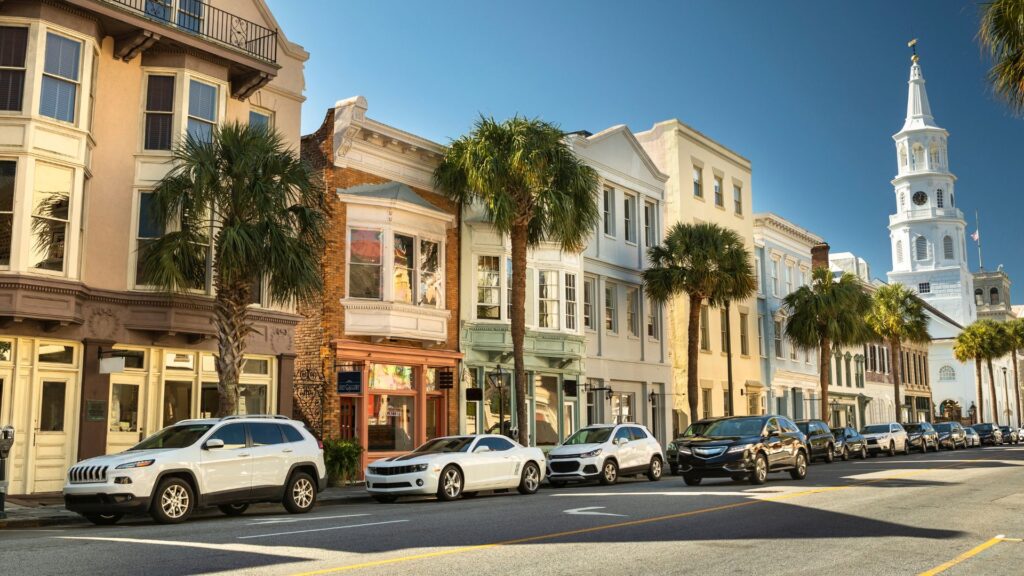
The underlying fundamentals of the Charleston area – including its strategic and beautiful location along the Eastern Seaboard with logistical port, air, and rail access, as well as its historic and cultural charm, growing population, diverse job opportunities, and high-end retail – ensure that it will remain an economic leader in the Southeast.
These fundamental forces will continue to shape commercial property values in the area, making Charleston a prime market for commercial real estate investment and development.

For expert commercial property appraisals in the Charleston area and beyond, contact Compass South Appraisals. Our team understands the local market dynamics that drive property values.