
Tax Assessment vs. Market Value: What Property Owners Should Know

Compass South Appraisals Blog

When trying to understand what your property is “worth,” two numbers often come up: tax assessed value and market value. They sound similar, but they serve different purposes.

Knowing the difference can help you plan for property taxes, make smarter refinancing decisions, and set realistic expectations if you’re considering a sale.

1. What Is Tax Assessed Value?

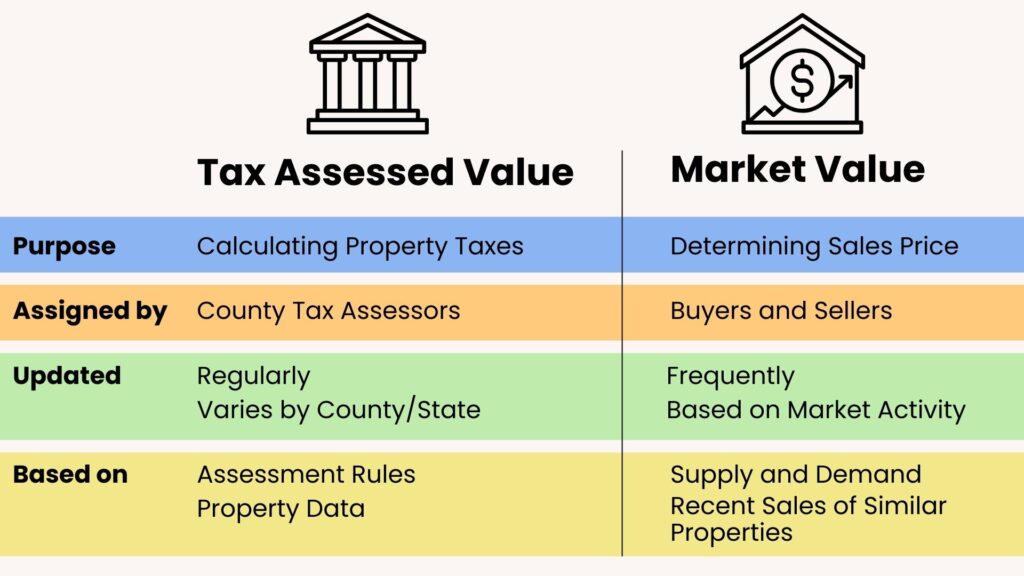
Tax assessed value is the value your local government assigns to your property to calculate property taxes. A county or municipal assessor typically determines this value using guidelines that may include:

  • Property size, age, and location
  • Recent improvements or additions
  • Comparable properties in the area
  • Local assessment rules and tax rates
Because assessments are often updated on a set schedule (such as every few years), the assessed value may not match today’s market conditions. In fast-changing markets, assessed values can lag behind.

2. What Is Market Value?

Market value is the price a willing buyer would likely pay for your property in the current market. This is the number buyers, lenders, agents, and appraisers focus on. Market value is influenced by:

  • Recent sales of similar properties (“comps”)
  • Supply and demand in your area
  • Property condition, features, and upgrades
  • Interest rates and broader economic trends

Market value can change quickly – sometimes within months – based on what’s happening in the local market.

3. Why Tax Assessed Value and Market Value Differ

It’s common for these two values to be different, sometimes by a wide margin. A few common reasons include:
  • Assessment timing: If your property hasn’t been reassessed recently, the value may be based on older data.
  • Assessment limits: Some areas cap how much assessed value can increase each year, even if market prices rise faster.
  • Market movement: Home prices and land values can shift quickly, while assessments often lag.

4. Where Appraisals Fit In

A professional appraisal is one of the best tools for estimating current market value at a specific point in time. Appraisals are commonly used when you are:

  • Selling or buying property
  • Refinancing or applying for a loan
  • Appealing a property tax assessment

Appraisers analyze property details and market data to provide an independent, well-supported opinion of value.

Blog

5. What Property Owners Should Do Next

If you want to stay informed and protect your investment:

  • Review your assessment notice each year for accuracy (property details, acreage, improvements, etc.).
  • Consider an appeal if the assessed value seems too high compared to similar properties.
  • Get a professional appraisal when you need a reliable market value for a sale, refinance, estate planning, or tax appeal support.

Final Thoughts

The assessed value helps determine how much you owe in property taxes. Market value reflects what your property could sell for in today’s market. Understanding both – and knowing when to rely on a professional appraisal – can help you make better financial decisions.

If you need an expert property appraisal, contact Compass South Appraisals. Our team specializes in a range of property types, including timberland, farmland, recreational land, and commercial properties.

Compass South Appraisals Blog

Partner with Expert Commercial Appraisers

For expert commercial property appraisals in the Charleston area and beyond, contact Compass South Appraisals. Our team understands the local market dynamics that drive property values.